


Building Design Automation
We help AEC firms turn design intent into automated workflows—parametric systems, AI-ready data foundations, generative solvers, and BIM integrations that run inside your existing tools.
Delivered so your teams can iterate faster, catch issues earlier, and scale consistent design across your portfolio.
-
Make the invisible dependencies visible.
We map your design process into systems-thinking diagrams of rules, decision points, hand-offs, and failure modes—so the automation scope is bounded, testable, and AI-ready.
-
Turn design intent into explicit logic.
We define the parameters, constraints, and acceptance criteria behind your standards—so automated outputs are consistent, auditable, project-ready and safe to scale with AI.
-
Connect your tool-chain into one workflow.
We design the logic and define the integration architecture for your existing platforms—so data and decisions flow cleanly end-to-end, creating an AI-ready digital foundation.
-
Keep delivery moving and make it stick.
We lead delivery across engineering, product, and software teams—so the capability survives beyond the pilot, becomes repeatable across projects and portfolios, and is governed in a way that's safe to scale with AI.
What This Means For You
-
![A group of five young adults working with laptops and computers around a wooden table in a cozy wooden-paneled room with large windows.]()
Tech/Platform Teams
Codify engineering know‑how into reusable rule sets, build automation that fits into customers’ existing BIM/computation tools, and deliver software workflows that work the same way across many projects.
-
![Silhouettes of three people talking inside a high-rise building with a city skyline in the background.]()
Developers
Generate and compare workable options quickly, make decisions earlier with clear pros and cons, and move from concept to final design with fewer redraws and more confident decisions.
-
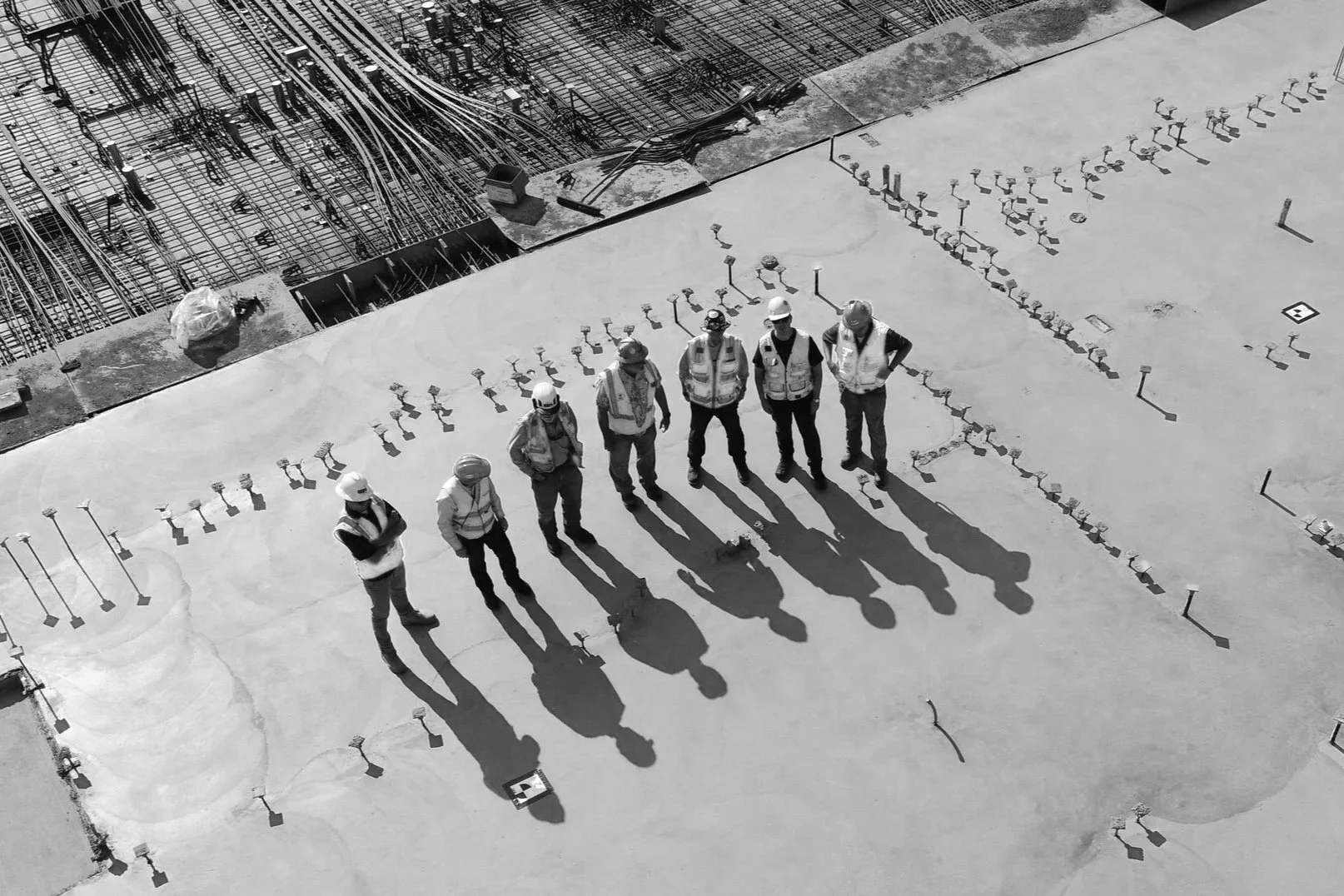
![Black and white photo of seven construction workers wearing safety vests and helmets, standing in a row on a construction site with their long shadows cast on the concrete floor. The site shows collapsed rebar and scattered construction materials.]()
Contractors/Builders
Set buildability limits and standards as simple rules, automate early trade coordination and option checks, and cut late changes—protecting margin, reducing claims risk, and keeping builds moving.
-
![A worker in black clothing and boots stands in an industrial warehouse, observing bundles of metal pipes being lifted by a crane with a hook.]()
Owner/Operators
Turn owner needs into clear digital‑twin data rules, automate option testing with traceable checks, and build a reliable digital twin at handover that's ready for operations and future upgrades.



Engagement Options
Option 1: On-Demand Specialist
Targeted support for a specific problem when you need expert capacity fast.
Option 2: Embedded Specialist
Part-time lead embedded inside your team to shape approach and drive decisions.
Option 3: Project Workstreams
A scoped engagement with defined milestones and a clear handover. Four sprints from discovery through to embed. Delivered standalone or as part of a broader programme.
Start with Sprint 1 and decide as you go. Each sprint stands alone: you only commit to the next step when you are ready.
-
4-6 weeks
Sprint 1 is a standalone fixed-fee engagement.
An independent review maps your current automation state, surfaces the gaps that are difficult to see when you are embedded in day-to-day delivery, and gives you a prioritised roadmap of automation opportunities to act on.
Then decide whether to continue.
-
4-6 weeks
Commit to one Implementation Cycle at a time.
Each cycle takes your top automation priorities and designs them to a level of detail your team can act on, with rules, workflow diagrams, and implementation guidelines documented and ready for development.
-
4-6 weeks
Commit to one Implementation Cycle at a time.
Each cycle works alongside your team on a live pilot, catches and resolves automation issues before they become embedded, and builds confidence and training materials before moving to the next priority.
-
Ongoing monthly or quarterly cycles
The work does not stop at handover.
Each cycle checks how your automation workflows are holding up on live projects, refines rules and logic based on real evidence, and builds the internal capability to keep improving without ongoing support.
Design and Framework (4-6 weeks)
Commit to one Implementation Cycle at a time.
Each cycle takes your top automation priorities and designs them to a level of detail your team can act on, with rules, workflow diagrams, and implementation guidelines documented and ready for development.
Enablement and Support (4-6 weeks)
Commit to one Implementation Cycle at a time.
Each cycle works alongside your team on a live pilot, catches and resolves automation issues before they become embedded, and builds confidence and training materials before moving to the next priority.
Embed and Sustain (Ongoing monthly or quarterly cycles)
The work does not stop at handover.
Each cycle checks how your automation workflows are holding up on live projects, refines rules and logic based on real evidence, and builds the internal capability to keep improving without ongoing support.
Discovery and Gap Assessment (4-6 weeks)
Sprint 1 is a standalone fixed-fee engagement.
An independent review maps your current configuration state, surfaces the gaps that are difficult to see when you are embedded in day-to-day delivery, and gives you a prioritised roadmap to act on. Then decide whether to continue.
1
2
3
4
Frequently Asked Questions
-
Design automation turns your engineering intent into explicit logic—parameters, constraints, and rules—that runs inside your existing BIM and computational tools. This allows your team to generate design options automatically, test variants faster, catch coordination issues earlier, and scale consistent standards across multiple projects without manually redrawing everything.
-
You can automate repetitive rule-based tasks like structural member sizing, space layouts based on constraints, MEP routing and clash checking, code compliance checks, and multi-option generation for comparison. The goal isn't to replace engineers—it's to free them from repetitive work so they focus on complex decisions, design intent, and problem-solving.
-
No—automation handles repetitive, rule-based tasks so engineers and architects can focus on higher-value work like design intent, stakeholder decisions, and solving complex problems. Think of it as your team getting a productivity multiplier, not a replacement. The creativity and judgment still comes from your people.
-
We map your design process into explicit rules, dependencies, and decision points with traceable logic. This creates a structured digital foundation where inputs, constraints, and outputs are clearly defined—exactly what AI systems need to learn from your data, suggest options, or automate decisions safely and auditability.
-
Yes—we help you build automation capabilities inside the platforms your team already knows and uses, like Revit, Rhino/Grasshopper, Dynamo, or custom computational tools. Our consulting approach focuses on unlocking the automation potential in your existing software investments. Where needed, we guide integration across your toolchain so design data flows cleanly end-to-end, enhancing your current workflows rather than requiring new software.
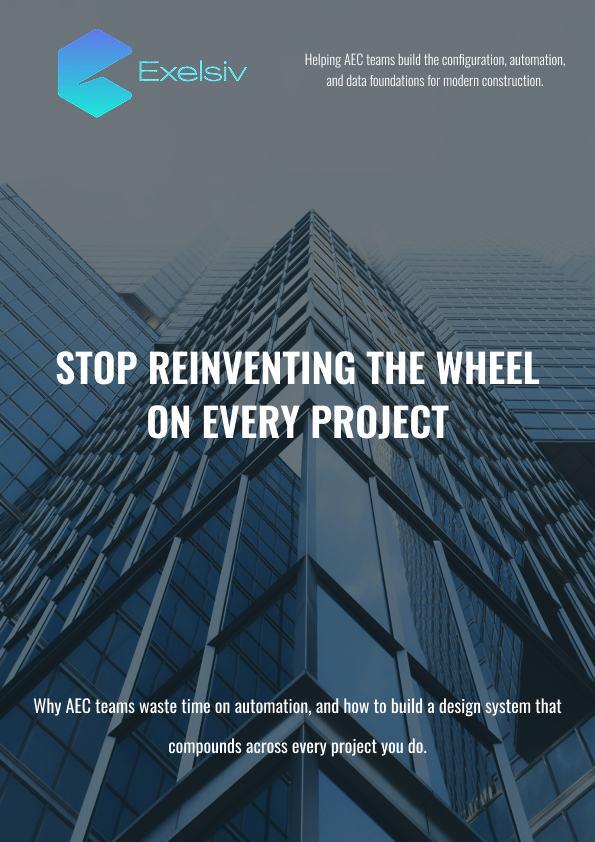
Free Resource: Building Design Automation Framework
Turn your design workflows into a system that gets more valuable with every project you deliver.
Download a short, practical guide that walks through the four steps Exelsiv uses to structure automation rules, data, decision flow, and tools across projects.
Evidence-led Insights
Read our evidence-led insights on building design automation and AI-readiness, or learn more about Exelsiv and our selected experience.





Contact Us
Whether you’re exploring a new project, looking to collaborate, or just have a question, get in touch!
We're based in Sydney and work with clients across Australia and internationally. Reach us directly using the form, connect on LinkedIn, or download our capability statement to share with your team first.